It happens more often than you’d think. You feel perpetually low, exhausted, and empty. You go to a doctor, describe your symptoms, and walk out with a prescription for antidepressants and a diagnosis of Major Depressive Disorder (MDD).
But months go by, and you don’t feel better. In fact, you might feel agitated, wired, or just… “off.”
If this sounds familiar, it might not be standard depression. It could be Bipolar II Disorder.
At The Beach Cottage at Seasons in Malibu, we frequently treat clients who have spent years, sometimes decades, being treated for the wrong condition. Understanding the subtle difference between these two diagnoses is the key to finally finding stability.
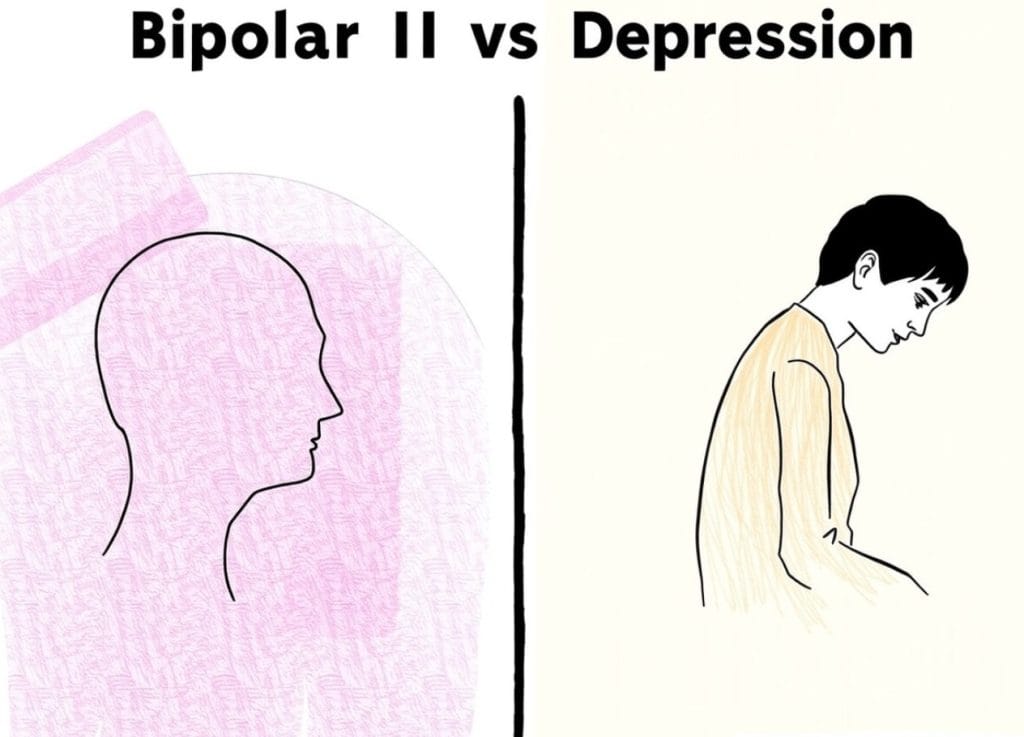
Key Takeaways
- Bipolar II is often misdiagnosed as depression because patients rarely report the high (hypomanic) periods to their doctors.
- Treating Bipolar II with only antidepressants can worsen symptoms or trigger rapid mood cycling.
- Look for short periods (2-4 days) of decreased need for sleep, racing thoughts, or intense irritability.
- A correct diagnosis requires a deep look at your life history, often necessitating a dual-diagnosis approach if substance use is involved.
The Hidden Highs of Bipolar II
When most people hear Bipolar, they think of Bipolar I: extreme manic episodes that might land someone in the hospital. These are easy to spot.
Bipolar II is different. It involves a softer form of mania called hypomania.
Hypomania is tricky because it often feels good. You might feel productive, charismatic, and full of energy. You’re getting things done, you need less sleep, and you’re the life of the party. Because this phase doesn’t usually destroy your life, you don’t complain to your doctor about it. You only complain about the crash that follows.
Because doctors only hear about the low points, they assume it’s clinical depression and treat it accordingly.
Why Antidepressants Can Make It Worse
This misdiagnosis is dangerous because the treatment for unipolar depression standard depression is often different from Bipolar II.
If you have Bipolar II, taking an SSRI (antidepressant) without a mood stabilizer can actually trigger a hypomanic episode or cause rapid cycling, where your mood swings wildly back and forth.
This is why we often see clients who say, ‘I’ve tried every medication, and nothing works.’ It’s not that you are broken; it’s that you’re being treated for the wrong chemical imbalance.
3 Signs It Might Be Bipolar II (Not Just Depression)
How do you tell the difference? Look for these subtle clues in your history.
1. The Clean Your Whole House Energy Have you ever had periods lasting 2-4 days where you suddenly felt wired? Maybe you reorganized the entire garage at 2 AM, started three new business ideas, or felt unusually irritable and impatient with “slow” people. If this energy feels distinct from your normal self, it might be hypomania.
2. A Family History of Mood Swings Bipolar disorder has a strong genetic component. If a parent, sibling, or close relative struggled with severe mood swings or addiction issues, your depression might actually be part of a bipolar spectrum.
3. Treatment Resistance If you have been in therapy and on medication for severe depressive episodes but haven’t seen relief, it’s a red flag. Depression that refuses to lift often signals an underlying complexity that a standard 15-minute doctor’s visit can’t catch.
Getting the Right Diagnosis
Correctly diagnosing Bipolar II takes time. It requires a doctor who looks at your entire timeline, not just how you feel today.
At The Beach Cottage, our psychiatric team does a deep dive into your history. We look for those hidden periods of high energy and impulsive behavior that other providers might have missed.
We also screen for co-occurring issues. It is common for people with untreated Bipolar II to self-medicate with alcohol or drugs to calm their racing minds or boost their low moods. Treating the substance use without addressing the mood disorder is like putting a band-aid on a broken arm.
Stability is Possible
If you are reading this and thinking, “Wait, that sounds like me,” don’t panic. Bipolar II is highly treatable.
With the right combination of mood stabilizers and therapy, specifically modalities like CBT that help you manage daily rhythms, you can live a life that isn’t defined by the crash.
You don’t have to white-knuckle your way through the lows anymore. If your current treatment isn’t working, it might be time for a second opinion.
Need clarity on your diagnosis? We are here to help you solve the puzzle. Contact our admissions team today.
FAQs
1. Can Bipolar II turn into Bipolar I?
Generally, no. They are distinct diagnoses. Bipolar II is characterized by hypomania (less severe highs) and severe depression. Bipolar I is defined by full-blown manic episodes that often require hospitalization.
2. Is Bipolar II harder to treat than depression?
It is not necessarily “harder,” but it requires a different toolkit. While standard depression often responds to SSRIs, Bipolar II usually requires mood stabilizers (like Lamictal or Lithium) to prevent the highs and lows.
3. Can I live a normal life with Bipolar II?
Absolutely. Many high-functioning, successful people have Bipolar II. The key is consistent medication management and lifestyle changes, like strict sleep schedules, which we teach in our mental health programs.
4. How do I talk to my doctor about this?
Bring a timeline. Write down periods in your life where you felt unusually energetic, didn’t need sleep, or made impulsive decisions. Doctors need to see the pattern of “highs” to differentiate it from standard depression.
5. Does trauma cause Bipolar II?
Trauma doesn’t cause Bipolar disorder (which is largely genetic), but it can trigger the onset of symptoms. Addressing past trauma is often a critical part of stabilizing the mood disorder.